All posts by greydogtales

John Linwood Grant writes occult detective and dark fantasy stories, in between running his beloved lurchers and baking far too many kinds of bread. Apart from that, he enjoys growing unusual fruit and reading rejection slips. He is six foot tall, ageing at an alarming rate, and has his own beard.

Lurchers for Beginners: Training Your Human

You are a lurcher. This means you are a member of a proud and noble race. You can ignore those other dogs with their certificates and their so-called pedigrees. They could only afford one set of genes, and now their ears are wonky and fall off, or they need zimmer frames because of their inbred hip problems. You come from at least two lines of genetic goodness, carefully blended to make you the handsome, superior creature that you are today.

You are the elite, fast as a cheetah (whatever that is), and with the sleek lines that every other dog desires. You can leap tall buildings, outrun trains and curl up into shapes that even balloon animals can’t achieve. Your eyesight matches the resolution of the finest binoculars, and your long nose is a wonder in its own right. The rest of you is pretty cool as well, but let’s not sound too self-satisfied.

lordgraham

As a lurcher you have responsibilities, and one of those is training your human. It’s not easy, but if you want to get the best out of them and give them a good, rewarding life, it is essential. So here is Part One of the Lurchers for Beginners guide to the subject.

Introduction

Firstly, humans can be trained. Ignore what some of the other dogs say. Humans are moderately intelligent, and can be loyal, affectionate companions if treated properly. But we’re not saying it’s all fun and games. A badly trained human is disobedient, wilful and no use to anyone.

In this first article we’re going to look at some of the main problem areas you might need to consider:

1. Social and Interpersonal Skills

1.1 Some humans are solitary; some like to live in packs. If it makes them happy, let them. It’s hard to see what they get out of it sometimes, and they do snap at each other, though there’s usually no lasting harm. Experienced human-trainers say that there may even be some benefits, but do watch out for them paying more attention to each other than to you.

passengers-1150043_960_720
humans in a pack (lurcher-eye view)

1.2 When you’re walking them, they meet other humans and then stand there for ages, making pointless noises to each other, even when you require attention. Once back from their walk, they stare at pictures on shiny boxes for hours until you physically get in the way and point out that you were calling them. Both behaviours show a lack of social skills and need addressing.

1.3 Do not rely on humans to guard your home. Some of them will let anyone in, and make little effort to sniff bottoms, check the stranger’s posture and obvious things like that. They have little idea of which species should and shouldn’t be in what is, after all, your home, not theirs.

an unwelcome intruder

1.4 Humans do have a basic language, although it isn’t suitable to convey the nuances that a lurcher might achieve. Be aware that your human(s) will not understand a lot of what you say to them, and try to make allowances. For example, a complex series of barks which make it clear there’s a squirrel ten point seven five metres up that third elm tree from the left, the tree is yours, and the human should go do something about it, will be lost on them. Keep it simple.

2. Behaviour in the Home

2.1 Humans steal food. It’s in their nature. On a regular basis they go into the cold box in the corner and take things you were planning to eat. If there’s a plate of something interesting on the table, they gobble down most of it themselves before you have a chance to get in there. Do not leave bones, sausages or other choice items unattended. You’re only asking for trouble.

your food is not safe!

2.2 They will go on the furniture, despite being told not to. This is particularly annoying. Some days it seems like everywhere you go, there’s a human lolling on the comfy chair, the sofa and so on. They take up a lot of space, and are quite stubborn about moving. A startled human can be quite hostile, so be careful.

pupsbed
the proper use of a bed

2.3 They insist on sleeping on the bed with you. This is a habit which is very hard to break. You settle down for a good night’s doze, and then a human pushes and shoves their way in next to you, or grabs all the covers and makes moaning noises about something. Sometimes they get so territorial that they push you out altogether.

sleeping-1159279_960_720
a badly-trained human

2.4 Humans are essentially lazy, and need exercising frequently. If you do not do this, they get fat and take up even more room when they manage to get on the sofa.

2.5 The one thing you can say in favour of humans at home is that they are toilet-trained. They choose one place in which to do their business, usually a small room upstairs, and stick to it. For some reason this room is full of tissue paper. We have no idea what that’s about.

3. Outside the Home

3.1 Let’s be clear about this one. Human recall is poor. There are times when you can bark or whine yourself hoarse before they come back to you and pay attention to the dead rat, fox droppings or mud-hole that you’ve found.

3.2 Humans are slow. It is possible to have some of the younger ones trained to run with you, but in general they will lag behind, make odd noises and wander off in the wrong direction. Remember that they are not able to cool down through use of their tongues, and will gradually end up soaked in their own sweat. Unpleasant but true.

distance
at this distance, a human will have no idea where you are!

3.3 Their eyesight is also poor. It only takes a bush or a small tree to be in the way before they have completely lost sight of you. Even if you are a mere mile or two away, they will have no idea where you are. At this point they will make strange yelping noises and shout a lot, apparently in distress.

3.4 They insist on investigating poo. And then they pick it up! What can we say? There seems no way to train most of them out of this. Instead of leaving poo where it is, to break down naturally or to leave an obvious signal for other dogs, humans collect the stuff like pack-rats and fill their pockets with it. There is no known explanation for such behaviour. It is unhygienic, but you may have to leave them to it.

In Conclusion

What can you, as a responsible lurcher, do about all of this? In Part Two, in a week or so, we will suggest some training tactics.

Remember, though, that no human is fully trainable. There will always be moments when they revert to their natural animal state and do something naughty.

chilli3
a lurcher today, appalled at her responsibilities

Be patient; be kind. Try to take the long view, and look at the affection and companionship which a well-trained human can provide over many years. It’s worth it.

Next time on greydogtales: More Strangers Seas. Our nautical weird theme continues…


Share this article with friends - or enemies...

Spawn of the Ripper: The True Story (PG)

Hurray! We’re going to the cinema, and sharing lots of things you never knew about those classic British horror movies of the sixties and seventies. Even better, we’re having fun with April Moon Book’s new anthology Spawn of the Ripper, a great collection of stories inspired by… a psychopathic frog? No, you guessed – classic horror movies of the sixties and seventies.

A few weeks ago we interviewed Neil Baker of April Moon Books, and to be honest we hadn’t expected to be back in Canada-land so quickly (see once in an april moon) Then we found out that Spawn of the Ripper was launching, and we had to be in on it, for we at greydogtales are unrepentant fans of those wonderful films like The Reptile, Twins of Evil and Dracula Prince of Darkness. We can’t include Django or Chilli, of course. They’re too young to watch such terrors.

fujose3sxvi44hyk3pxz

So we thought we’d look at a few of the films behind the April Moon anthology, and give you the low-down on the book at the same time. As Neil has produced suitably cheesy poster illos for the stories, we have the added pleasure of including some of those and some posters from the original films. We do like pictures – they distract our listeners from any mistakes in the articles.

Spawnspread

Spawn of the Ripper itself is fresh off the press, and Neil describes it as “my love letter to the men and women before and behind the cameras at Bray and Shepperton, who created some of the most beautiful horror on film.”

What are these strange and wonderful films? We brush briefly past their content to provide you with the trivia you either already knew or will soon wish you didn’t (and yes, we’re bound to have got something wrong – that’s how trivia work)…

From the book – “Spawn of the Ripper’ by Glynn Barrass and Martha Bacon is inspired by Hands of the Ripper while Christine Morgan’sImmacula: Blood Communion’ is a darkly humorous take on the classic vampire tale.

“‘The Fates of Dr. Fell’ by Josh Reynolds channels the glorious portmanteau Dr. Terror’s House of Horrors while Ben Stewart’sThe Avenger Cometh’ and John Hunt’sThe Tablet’ owe more than a little to one of my favorite films, Captain Kronos: Vampire Hunter.”


tumblr_mbxxqyxctd1rqikfxo1_500

Hands of the Ripper is from 1971. As a child, Jack the Ripper’s daughter witnesses him kill her mother. As a young woman she unconsciously carries on the murderous reign of her father. A psychiatrist tries to cure her, but all does not go well.

Trivialtales: Whilst it stars Eric Porter of Forsyte Saga fame, it is more remarkable in that Lynda Baron, who plays Long Liz (a real-life Ripper victim), is also Nurse Gladys Emmanuel in the BBC series Open All Hours. She is still playing this role even today, forty years after Open All Hours began. And she’s been in Doctor Who alongside both William Hartnell in 1966 and Matt Smith in 2011. Impressive or what?

9932021

Dr Terror’s House of Horrors, from 1965, stars Peter Cushing as Dr Terror, aka Dr W R Shreck. This is one of those lovely multiple story films. An architect returns to his ancestoral home to find a werewolf out for revenge; a doctor discovers his new wife is a vampire; a huge plant takes over a house; a musician gets involved with voodoo; an art critic is pursued by a disembodied hand.

fell1

Trivialtales: The film was a deliberate attempt by writer Milton Subotsky to repeat the success of Dead of Night from 1945. Subotsky rose to fame producing Rock, Rock, Rock in 1956, a film about a girl getting ready for the prom, starring Chuck Berry, The Flamingos and other rock and roll stars. Subotsky wrote most of the songs, and the soundtrack album is often cited as Chuck Berry’s first album.

220px-Captainkronosposter

Captain Kronos Vampire Hunter – 1974. A village is stricken with premature ageing and sudden mysterious deaths. Dr. Marcus calls in his army friend, Captain Kronos, to help. Kronos and his companion, the hunchback Hieronymus Grost, are professional vampire hunters. Grost explains to the initially sceptical Marcus that the dead women are victims of a vampire who drains not blood but youth, and that there are “as many species of vampire as there are beasts of prey.”

Trivialtales: The film’s score is by Laurie Johnson. From the 1960s to the 1980s, he composed over fifty themes and scores, including the themes used on iconic UK TV series such as The Avengers, Jason King, The New Avengers and The Professionals. Many of Johnson’s works have since become stock music for series such as SpongeBob, Squarepants.

From the book – “Amy Braun’sThe Maker of Monsters’ has shades of Vampire Circus about it, while ‘Blood Red Dahlias’ by Jonathan Cromack echoes the psychological horror of Asylum. The nefarious carryings on of Baron Frankenstein are well represented by the stories ‘The Brain of Evil’ by D.J. Tyrer, ‘Scourge of the Flesh Devils’ by Coy Hall and ‘The Private Ambitions of Arthur Hemming’ by Pete Mesling, and the seedy underbelly of society mixed with black magic is represented by R. Allen Leider’sNightwork’.”

vampire-circus-one-sheet-poster

Vampire Circus is a 1972 release – a travelling circus called the Circus of the Night appears mysteriously at a village ravaged by plague. Are this appearance and what happens next connected to the vampire killings of many years before. Well, yes. What did you expect?

Spawncircus

Trivialtales: Three of the cast – Adrienne Corri, Laurence Payne and Lalla Ward – came together again in the 1980 season of Dr Who with Tom Baker as the Doctor. And David Prowse, who later played (the body of) Darth Vader in the first Star Wars trilogy, appears in a silent role as the circus strongman in Vampire Circus. Did you know that he also played the minotaur in the Dr Who story The Time Monster, with Jon Pertwee as the Doctor this time?

asylum
Asylum, also 1972, concerns the arrival of a certain Dr Martin at a secluded asylum “for the incurably insane”, to be interviewed for a job by the strange, wheelchair-bound Dr. Lionel Rutherford. Rutherford wants to see if Martin is right for the position of chief doctor. Rather than have a look at his CV, Rutherford tells him to interview the inmates and work out which one is Dr Starr, the former head of the asylum.

dahlias

Trivialtales: The film was scripted by Robert Bloch, who adapted four of his own short stories for the screenplay. Barry Morse, who plays inmate Bruno in the film, was later to take the lead role in Space: 1999, and was born Herbert Morse. Herbert Lom, on the other hand, who plays Byron, was born Herbert Charles Angelo Kuchačevič ze Schluderpacheru in Prague. And not Barry Schluderpacheru, as you must have expected. Disappointing.

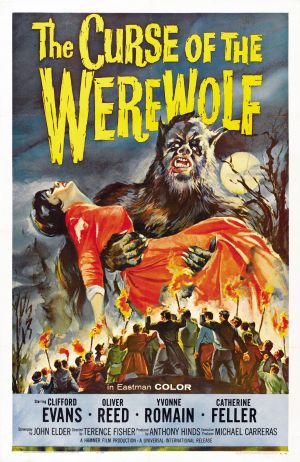
From the book – “Patrick Loveland’sThe Five Crystal Dragons’ is an obvious and thrilling take on The Legend of the Seven Golden Vampires and ‘The Blood-Soaked Sand’ by Aaron Smith is a ripping yarn full of derring-do and monsters in Egyptian temples. Finally we have John McCallum Swain’s entertaining ‘The Wolf Who Never Was’ which purports to tell the true story behind the making of The Curse of the Werewolf and Oliver Reed’s legendary drinking.”

legend_of_7_golden_vampires

The Legend of the 7 Golden Vampires, 1974, was the ninth and final film in the Hammer Dracula series. It was released in North America in an edited version as The Seven Brothers Meet Dracula, and alternatively known as The Seven Brothers and Their One Sister Meet Dracula. An old monk summons Dracula from his tomb to tell him that a Chinese cult, the Golden Vampires, is losing its power, and Dracula is needed to restore their former glory. The Count possesses the monk’s body and heads for China, as you would. High oriental jinks ensue.

Trivialtales: This is the only Hammer “Dracula” film not to feature Count Dracula’s name in the title of the film, and the only one where Dracula was not played by Christopher Lee. This was also the last time Peter Cushing would play Van Helsing. The film is notable for the use of the Chinese vampire, the jiangshi. If you’re used to Western vampires swirling and striding around in Gothic manner, the Chinese ones take a little adjustment. They hop. They hop a lot, arms outstretched as tradition demands. So there.

Curseofthewerewolf

Curse of the Werewolf, 1961. It’s a bit of a tragic tale. A young woman refuses a nobleman’s advances, is thrown in jail and raped by a mad beggar while in there. When the girl escapes, she is taken in by a scholar and his wife, but she dies after giving birth to a baby on Christmas Day. The boy, Leon, is cursed by the evil circumstances of his conception and by his Christmas Day birth. An early hunting incident gives him a taste for blood, which he struggles to overcome. Dot dot dot.

wolfilm

Trivialtales: This was Oliver Reed’s first credited film appearance, and the only werewolf film made by Hammer. But wait… the film also includes Peter Sallis, as Don Enrique. Gosh.

_78069908_000304033-1

Peter Sallis is famed for his role in Last of the Summer Wine (he appeared in all of the 295 episodes from 1973 to 2010), and was the voice of Wallace in Wallace and Gromit. In both cases, despite being born in London, he was forced at gunpoint to use a Northern accent.

Not only that, but we should mention the 2005 Wallace and Grommit film The Curse of the Were-Rabbit, in which Sallis played opposite such luminaries as Ralph Fiennes and Helena Bonham-Carter – and Mark Gatiss! Yes, 44 years after working with Oliver Reed, Sallis finally became the werebeast himself.

Extra trivialtales: This echoes the myth of the kallikantzaros, in some cultures a demonic creature, in others a cursed child born between December 25 and January 6, which are known as the ‘unbaptised’ days in Serbian folklore. These children were at risk each Christmas of turning into dakr and twisted things. It was one element of that wonderful book by Roger Zelazny, This Immortal, originally serialised as And Call Me Conrad. You should read it. And Zelazny’s Isle of the Dead, which we covered here: the isle of the dead

20208497

With reference to Aaron Smith’s story in the anthology, we have an excuse to mention Valerie Leon, famed for her dual role as Margaret and the ancient Egyptian Queen Tera in Blood from the Mummy’s Tomb. Blood from the Mummy’s Tomb was made in 1971, and based on Bram Stoker’s novel Jewel of the Seven Stars (The Awakening, another version of Stoker’s tale, was made in 1980 but wasn’t as good as this one).

valerie-leon-23

Trivialtales: This would have been a Peter Cushing film but Cushing had to pull out because his wife was ill. Five foot eleven inches tall, Valerie appeared with both Roger Moore and Sean Connery in Bond films, did seven Carry On movies and loads of TV work. She was also famous at the time as the Hai Karate advert girl.

There you are. An entire article which is of no use except to fill your mind with pointless oddities. We do love that. In summary, Spawn of the Ripper is great fun and well worth a look.

####

We give a special last nod to Joshua M Reynolds, whose story The Fates of Dr Fell was particularly enjoyable, with a wry twist on the old portmanteau films we used to love. We laughed; we cried. Apart from the crying.

the royal occultist book two

Sadly, Josh still insists on producing his St Cyprian tales, with Charles St Cyprian as the successor and inheritor to the Cheyne Walk domain of Thomas Carnacki. Josh is thus the major competition to Tales of the Last Edwardian, in that he too writes after the loss of Carnacki.  We may yet have to instruct our own Mr Dry, the infamous Deptford Assassin, to pay him a warning visit…

Next week on greydogtales – something lurchery, we hope, and a super interview with fantasy author and nauticalist Matt Willis as part of the astounding Stranger Seas series (yes, we’re easily astounded here).

Share this article with friends - or enemies...

Strangers Seas: Cameron Trost & The Brisbane Factor

Interested in horror from Down Under? We’re still swimming across  Stranger Seas, and today we have really gone the distance – to Brisbane, Australia, in fact.  We’re delighted to be joined by Cameron Trost, horror writer and publisher, and we’ve added some moody sea art by Sebastian Cabrol and another appropriate Reiko Murakami.

strangerseasgen

Odds and sods of news first. The old greydog himself, known affectionately as John Linwood Grant to the Inland Revenue, now has half a dozen new stories being published this year, including dark Edwardiana, a Sherlock Holmes novella, a contemporary ogre tale and a Lovecraftian horror. More news will appear here if we remember. We should start a blog. Oh, hang on…

And we’re upping our lurcher and longdog content soon (but not at the expense of the weird), hopefully with another UK rescue feature, plus  Lurchers for Beginners 6 (or 7?) and some other stuff.  Speaking of which, the lovely Jenny Kirk, who we met through the lurcher world, sent us this picture of Sheffield, which we just had to share:

gary france
gary france

Our links have been expanded and updated, including a new one for writer, editor, Hope Hodgson expert and regular contributor here, Sam Gafford. He has a freshly-minted, shiny author’s website which you can find at:  sam gafford, author. Pop along and marvel at Sams’ industriousness, buy his books and so on. That way he may do more contributions for us.

####

Now, we did have a Stranger Seas interview here somewhere, under one of the longdogs. Here we go…

Cameron Trost

CameronTrostAug2014

greydog: Welcome to greydogtales, Cameron. As you know, we’re currently majoring in nautical horror, so your anthology Lighthouses naturally caught our attention while we were trawling. As greydog’s father was a lighthouse keeper, we had to look closer. What inspired this particular idea?

cameron: The theme for the anthology is the chicken, and Black Beacon Books is the egg. When I founded my small press back in 2013, I wanted an original and mysterious name. I played around with a few ideas and liked the imagery of a black beacon perched atop a mountain or braving raging seas. I think it represents the tales I wanted; welcoming lights or urgent warnings in the dark. The idea for an anthology of dark tales about lighthouses and beacons resulted. There aren’t many lighthouse anthologies out there, and none with the dark atmosphere of this one. The potential for gripping and atmospheric tales was too great to ignore, and, as it turns out, the contributors delivered exactly what I wanted.

81VHLfufj6L._SL1500_

greydog: What would you say are the attractions of the sea for horror and weird fiction writers?

cameron: The isolation. The danger. The unknown depths full of mystery. What strange creatures lurk below the waves? What secrets are held in the hull of that abandoned ship? Does the sea cave of that desert island hide horrors and delights beyond reckoning? A talented horror or weird fiction writer can make the local supermarket a place of terror, and that can be really disturbing, but the sea more readily lends itself to exciting and intriguing plots, evocative settings, and memorable characters. Your father was a lighthouse keeper, so I think you know what I mean. I bet he was a bit of a character and had some tales to tell.

demons of the sea-08
demons of the sea, cabrol

greydog: Yes, he really was a great story-teller, an eccentric man who loved being out on the rock lighthouses. where the imagination went wild. We were never sure how much to believe! How about you? Are you a landlubber or a high seas drifter?

cameron: I was born and grew up in Brisbane, a river city. It is on Moreton Bay (and there are legends of Portuguese treasure still waiting to be found) but I spent most of my childhood in the city itself. In his younger days, my father was a launch master on the Great Barrier Reef and a salvager in Moreton Bay, but the longest I’ve ever spent on a boat was a ferry trip from Melbourne to Tasmania, which is about ten hours. I love forests, which tend to be lacking on the high seas, but I like hiking along coastal paths and swimming in the surf. So, in answer to your question, I guess I’m a landlubber whose ideal environment would be a forest near the coast with paths leading past a lighthouse on a cliff. Steps are being taken to move the family to such a place.

sebastian cabrol
sebastian cabrol

greydog: Sounds ideal. Hoffman’s Creeper and Other Disturbing Tales is the first collection of your short stories. Is there common ground between the stories in there, or do you prefer diversity and different angles?

cameron: They are all tales of suspense and mostly have twists at the end. That’s the kind of story I like to read and it’s what I like to write too. Although every tale is different from the others, they are all suspenseful and disturbing. Many readers have complimented me on my ability to create an unexpected twist, and I think I do that by ensuring that my fiction is original (a quality that most readers don’t appreciate – just look at how annoyingly predictable most popular books and films are) and that I use the subtle art of misdirection effectively. In terms of character, there probably isn’t a lot of diversity (I find myself writing about heterosexual white people) but I like to examine the difference between working-class folk and the filthy rich. As for setting, the reader is taken from Brisbane to the Scottish Highlands, and from the French Pyrenees to the Australian desert. Despite any difference in setting, however, these tales are generally quite similar in that I try to write about people just like you, in towns just like yours, and then I do something to freak you out.

hoffmans

greydog: Now we want to go and check what that noise was. Tell us something about the themes you’re exploring in your forthcoming work. We’ve heard talk of novellas.

cameron: Let Darkness Take Hold, which is in Hoffman’s Creeper and Other Disturbing Tales, could either be considered a long short story or a short novella. Apart from that, I’ve completed the umpteenth draft of a novel manuscript, and I’m in the process of writing a series of novellas about a private investigator, of which I’ve finished the first draft of two of the mysteries and am working on the third. Early days yet, but I’m very excited about this investigator and the puzzles he sets out to solve.

cropped cover
sebastian cabrol

greydog: You founded Black Beacon Books in 2013. Earlier this year we talked to Neil Baker, of April Moon Books in Canada, about the trials and tribulations of running a small/micro press (see  once in an april moon). Have you found it a stressful process?

cameron: I haven’t found it stressful, mostly because I’ve been careful with money and realistic with deadlines. I recognise that Black Beacon Books is not (at this stage, at least) a business, but rather a project. What I have found disappointing is the lack of support. My writers work very hard on their stories and I edit their work painstakingly. A huge amount of time and effort goes into producing a publication. Don’t get me wrong, I have received encouragement and support, for which I am eternally grateful, but more is needed.

In particular, it’s really hard to convince people to actually buy books. That’s the biggest challenge. I’m not a marketing expert and I don’t have the means to pay for advertising (which is why I love interviews and reviews – thank you). ‘Trust me, this is a great book. It’s way better than 90% of what’s out there.’ That’s what I want to tell people, but that just doesn’t work. I think the key for Black Beacon Books is to take it slow, focus on quality over quantity, and appreciate every individual sale, review, and compliment. As our reputation grows, so will our readership and support base… right?

subtropical

greydog: We’ll certainly do our part, and keep our tendrils crossed for you. Neil said similar things about the whole marketing problem for small presses. You’re also heavily involved in the Australian Horror Writers Association. Is there a thriving membership in Australia?

cameron: It is a wonderful association with around two hundred members. Australia is a vast country, but we keep in touch online. We also meet up sometimes. I am the coordinator of the Queensland community and there is a monthly pub session in Brisbane which is hosted by Stacey Larner, an AHWA member. We occasionally have free tickets for horror film opening nights too. We even had a game of lawn bowls together a while back. If anybody is interested in joining the AHWA, they should get in touch with me. One last thing, we are running our horror fiction competition right now and entry is open to everybody: ahwa story competition

510Zq35bwWL._SY344_BO1,204,203,200_

greydog: In Sunshine Bright and Darkness Deep is an anthology of Australian horror from AHWA members. Do you see any differences in Australian horror, as opposed to that from other countries?

cameron: Definitely. In terms of language, we use British English but have our own colloquialisms and sayings, like ‘mad as a cut snake’. This is the first and most obvious difference. Of course, setting is the big difference. We live in an ancient land which is full of strange animals and eerie landscapes. Our days can we sweltering and bright, our nights dark and mysterious. We suffer droughts but also have some of the world’s most impressive thunderstorms and cyclones. There is no doubt about it, the Aussie landscape, and seascape, of course, is ideal for horror tales. The potential for weirdness and spookiness is infinite. There are numerous Australian horror anthologies and magazines out there, from Terror Australis (1993) to In Sunshine Bright and Darkness Deep. Going even further back in time, we have a rich colonial tradition of gothic and ghost fiction including the legendary Barbara Baynton.

demons of the sea, cabrol

greydog: We know it’s unfair to single people out sometimes, but who do you think we should watch out for in terms of Australian writers who work in this genre?

cameron: We have so much talent here, and there are so many different kinds of horror being written. It is difficult to single any one person out, but I have recently become a fan of Joseph Ashley-Smith. I admit, he was actually born in England, but he is one of ours now. j ashley smith

practice, by reiko murakami

greydog: A name to check out. Now, we have absolutely no knowledge of Brisbane (most of our Australian friends are in Melbourne). Maybe you could give us a quick word-picture of the place while you’re here?

cameron: Brisbane is the third city of Australia with a population of about two million. It has changed a lot since I was a kid. It has long had a reputation as an overgrown country town, but it is definitely a big city now… almost too big, in my view. The best thing about Brisbane is the subtropical climate and the parks; we have plenty of gorgeous trees inhabited by birds of all different kinds, and the world’s biggest bats. It’s not a cultural capital (like Melbourne) and it’s probably bloody boring if you’re used to a metropolis like London or New York, but it’s a liveable city and close to some of the most beautiful beaches in the world… no, not those ones, I’m keeping the really beautiful ones a secret. There is some great mountain and forest hiking too.

A little history? Brisbane is young. It was founded as a penal colony in 1824, and people now buy souvenirs and eat ice cream in Queen Street, on the very spot where convicts used to be whipped until their backs bled. What about the treatment of the indigenous population? Well, there are at least seven streets in Brisbane called Boundary Street, so I’ll let you ponder the significance of that. But our dark past aside, it’s a beautiful city, and I love to feature it in my stories.

building-690854_960_720
a lighthouse, just waiting for you…

greydog: And what else are you planning for 2016 – more Black Beacon books, more short stories? You mentioned a novel earlier.

cameron: As a full-time English teacher and a father of two young boys, time is a scarce resource, but I’ll try to get some more writing done. At the moment, Black Beacon Books is accepting submissions from local writers for an anthology of dark tales set in Brisbane, and hopefully that will be released in 2017. Later this year, I’ll probably announce a submissions window for another anthology, open to everybody. As for my own writing, I’d like to finish my next short story collection and polish my novel this year. I’d also like to find a publisher for the first novella in my mystery series. The short story is my preferred form, and I feel that it allows me to demonstrate my abilities as a wordsmith and tell a tale more effectively than the novel. I read far more short fiction than novels and admire my favourite writers for their short stories; Sir Arthur Conan Doyle, Edgar Allan Poe, Ruth Rendell, Roald Dahl, Patricia Highsmith, to name a few. That said, it would be great to get the novel out there in 2016 or 2017. I’ve worked hard on it and am proud of it, and I think the popularity of the longer form will lure more readers my way.

greydog: Many thanks for joining us, and good fortune with your projects.

cameron: Thank you for your interest and support.

You can find out more about Cameron and Black Beacon through the following links:

cameron trost
black beacon books

And the great Ginger Nuts of Horror are also talking to Cameron here: cameron trost interview pt 1

seas5

That’s us done for the day. Do tune in, dearest listeners, in a couple of days for more weirdity and strangelings…


Share this article with friends - or enemies...

Stranger Seas: Seven Things that Shaped a Childhood

or A Damp Youth Remembered

Today’s post is dedicated to those weird and exciting nautical fictions which started a lifelong interest in aquatic adventures (mostly from an armchair). A couple of weeks ago I talked about growing up on the North Sea coast, and the way in which its bleakness and legends creep up on you (whale-road, widow-maker).

This time I want to expose the soul of a little boy. The authorities wouldn’t let me do that, sadly, and then they took away all my knives, even the one for de-boning chickens. So instead, I’ll just tell you about the joys of encountering some key books, TV and comics when I was young, and the other reason why we have a Stranger Seas theme…

One: The Beast from 20,000 Fathoms

This wonderful film, originally from 1953, is probably the first real monster film that stuck with me, far more exciting at the time than vampire or werewolf films. The entire concept of a super-dinosaur, the fictional rhedosaurus, being revived seemed almost possible to my tiny mind. I didn’t actually believe that vampires existed, but gosh, there had been dinosaurs, and scientists did odd things, so maybe this could really happen!

Rhedosaurus_&_the_lighthouse

Typically, the rhedosaurus is released from hibernation by an atomic test in the Arctic. Feeling peeved, it swims and tramples its way south, heading for New York. Why? Well, it likes sailors and it wants to spawn. Something like that.

With stop-motion animation by Ray Harryhausen, how could it go wrong? I should also mention, given my lighthouse keeper father, that the film includes an exciting scene where the rhedosaurus destroys a lighthouse. Clever listeners will know that this part is based on Ray Bradbury’s short story, The Foghorn. Quite frankly, I wasn’t sure whether to root for the lighthouse or the dinosaur.

I have a slight problem nowadays in that I make 20,000 fathoms to be nearly 23 miles. As the Pacific Ocean’s Marianas Trench reaches a depth of 6.8 miles, wouldn’t that have put the poor dinosaur somewhere in earth’s crust, entombed in solid rock?

Two: Stingray

This hardly needs explaining, surely? The adventures of Troy, Phones and Marina were obligatory viewing. Made between 1964 and 1965 with Gerry Anderson’s Supermarionation technique, Stingray was a bit more realistic than Fireball XL5, and to me at the time, almost possible.

aa6562_(1)

Human submarines were fine and dandy, but what I truly loved was the whole undersea menace of the aquaphibians and their mechanical fish. Races from the deep, advanced and ready to do battle with mankind. Yes please.

It was only while checking out the release dates and cast for Stingray that I discovered one of those pieces of trivia that we love at greydogtales. A number of the voices on Stingray were provided by David Graham (his performance as Oink the seal was not, alas, one of the highspots of his work). And David Graham was also the voice of my favourite non-aquatic monsters, the mechonoids from Dr Who.

Dalek_fighting_Mechanoids
a mechonoid tries to give a dalek a friendly hug

Shown gloriously in the series The Chase, I loved the mechonoids. Robots/constructs who could take on the daleks, with their cool geodesic look and their wonderful futuristic city. At times I wanted the mechonoids to win and become the new major enemy for the Doctor.

Graham went on to provide voices for many beloved shows, and is, rather astonishingly, the voice of Parker in the animated series Thunderbirds are Go, made in 2015. At the age of 90. That is impressive.

Three: Voyage to the Bottom of the Sea

Made between 1964 and 1968, this TV show was Stingray in (sort of) real life – bigger, tougher and fighting to save the planet from sea-borne or sea-focussed threats. Obviously knowing my tastes, despite the political and espionage issues the crew faced, every so often the writers would throw in aliens, sea monsters, dinosaurs and ghosts to threaten the wonderful submarine Seaview.

Sadly, the wiring on the Seaview had not been checked to EEC standards, and any slight turbulence resulted in sparks, smoke and major electrical breakdown. They got through an awful lot of fire extinguishers, I seem to remember.

Four: Hornblower

Not weird, perhaps, but maritime and an inescapable influence. My father had a lot of books, though it wasn’t exactly a literary collection, more a bit of everything, from Zane Grey to Dennis Wheatley (we’ll come back to him). He did, to my delight, have all the C S Forester Hornblower books in print, and I read the lot. Many, many times, as Betty Marsden used to say on Round the Horne.

forester-hornblower
not trying to cash in on the film at all

To add to the pleasure of disappearing up your own rigging for hours on end, in 1951 they had made the one Hornblower film at that time, and it came up on TV fairly often. With the insanely wild title of Captain Horatio Hornblower R.N., and starring Gregory Peck, it was thrills, laughs and harrumphs from start to finish.

gregory-peck-hornblower-2

I still re-read the Hornblower books, although they don’t have many ghosts or aliens in them, which is perhaps their one shortcoming. As for the films, our editor-in-chief has a marked preference for the Ioan Gruffud versions. I’m not sure that she’s paying much attention to the plots, though.

Five: Sea Devils

A split entry here, because I came across both the Dr Who Sea Devils series on TV (1972) and the DC comic of the same name at about the same time.

Dr Who gets precedence. With Jon Pertwee in full ruffed-shirt dandy mode, and Roger Delgado as the Master, this was top stuff. The scene where the Sea Devils themselves rose from the sea reminded me of the Dr Who film where the daleks come out of the Thames. I loved the reptile-house-and-trawler look they had going, and the weapons which weren’t shaped like human guns, giving them a definitely different vibe. Two years before, the Doctor had encountered their equally ancient cousins, the Silurians, and now the Master was urging the fin-heads up from the deep to take on mankind. Pure pleasure.

seadevil

As I was fourteen or fifteen at the time, it would be wrong not to mention the gorgeous Katy Manning as Jo. The Jon Pertwee/Katy Manning period of Dr Who was one of my favourites, and still is. I’m sure that my excitement had absolutely nothing to do with Katy bending over a lot in tight denim jeans, or those adolescent surges of hormonal madness. I was an intellectual child, wasn’t I? The fact that she later posed naked with daleks also left me entirely unaffected, apart from the need for cold showers and urgent medication…

3235c9180e81020da47b45030d38ac4a676c319d_hq

Whilst digging up Silurian dirt, I also noticed that the nice people at Big Finish Productions (remember the new Carnacki?) have a nautical adventure available – Bloodtide. The Sixth Doctor and Evelyn meet Charles Darwin on the Galapagos, where newly-awakened Silurians have horrifying plans for mankind. Who Evelyn is I have no idea.

Bloodtidebloodtide on audio

I was a huge fan of US comics, and so the other nautical link here is to the DC Comic The Sea Devils. Unusually for my collection, this was a team of conventional adventurers, with no superpowers, in undersea exploits.

Sea_Devils_12

They were created by writer Robert Kanigher and artist Russ Heath, and were fun. Short on invulnerability etc, they swam along facing some mundane problems and the occasional alien or monster. A bit like Voyage to the Bottom of the Sea but without knowing where their massive nuclear submarine had gone.

I like the fact that they were called things like Dane Dorrance and Biff Bailey. People in the UK did not have these type of names. Actually, I’ve never yet met anyone called Dane or Biff, so I might be missing out. And I seem to remember that they did have a green skinned amphibian in some episodes, so they fit the weird bill (better than Hornblower, anyway).

Six: They Found Atlantis

We’re still talking my childhood here. Dennis Wheatley’s book They Found Atlantis (1964) was a sort of icky, scary forbidden book nicked from my father’s shelf when I was young. It had hideous creatures in it, and sex!!! It made a big, if somewhat unpleasant impression on me. I found the uninhibited sex puzzling but arousing, and the monstrous bits very scary. Ever since then I have point-blank refused to date flesh-eating, stinking, grey-white fishmen.

6695162921_6279793459_b
the copy we had at home

The crucial point is that, unlike many teasing titles of the time, they do find Atlantis. Which is a weird place. It’s not as good as his black magic books, being half political-type thriller and half mad science fiction. I have a feeling that if I read it again it would be a bit meh! I could be wrong.

Seven: 20,000 Leagues Under the Sea

It seemed appropriate to start with 20,000 fathoms and end with 20,000 leagues. We’re talking the film here, not the book. I read Jules Verne’s story some time later, but my sponge-like young brain was greatly taken by James Mason’s magnificent Captain Nemo. Filmed in 1954, it has the coolest submarine, the Nautilus – better than Stingray, more steam-punk fun than Seaview.

twenty_thousand_leagues_under_the_sea_ver2-365x512

Once again the title measurements puzzled me, given that 20,000 leagues is about 69,000 miles. Thankfully someone pointed out that the leagues referred to distance travelled whilst underwater, not how far down they went. A relief, because otherwise they would have become a spaceship.

Nautilus3
eFX model nautilus

James Mason is of course superb, and you’re on his side all the way. Still a very enjoyable film, and you get Kirk Douglas and Peter Lorre thrown in. I’m fairly sure you’ll find that the aquaphibian’s spy in Stingray was modelled on Peter Lorre, as well. Sure sounds like him.

In conclusion, all I can say is that if you slam all those together by the time you are in your teens, you have the making of Stranger Seas. What you do with it then is anybody’s guess…

Share this article with friends - or enemies...